Thứ Năm, 23 tháng 10, 2014

Bai Tu Long National Park

Bai Tu Long National Park
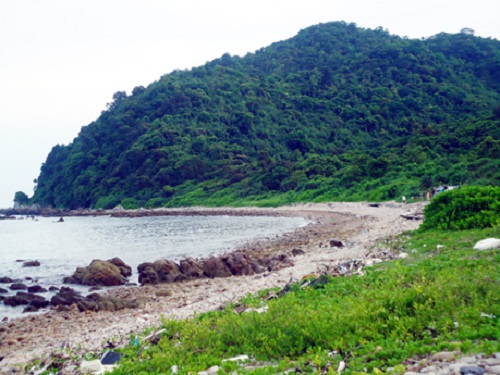
Bai Tu Long National Park is a protected area zone in northeastern Vietnam. It was established in 2001, succeeding from the former Ba Mun National Conservation Zone. It is one of seven Vietnamese amphibian national parks which has both terrestrial zone and aquatic zone.

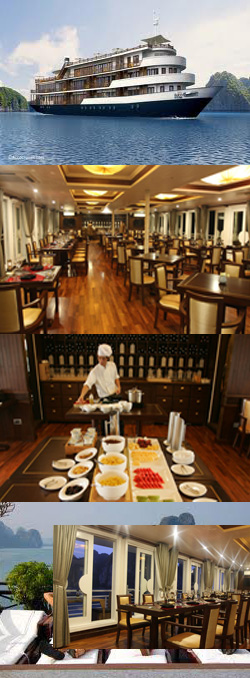
It is located within Bai Tu Long bay, which with Halong Bay forms an impressive scenery of sea and islands. Including thousands of islands and rocks, they create one of the most beautiful bays in the world. Visit Bai Tu Long Bay with Halong bay tours

According to legend, an immense dragon descended to Ha Long Bay (meaning ‘’Descending Dragon’’) millions years ago, dropping numerous eggs. These eggs hatched forming thousands of rocks and islands. The tail of the dragon extended far to the sea, forming Bach Long Vi (meaning ‘’The Tail of the White Dragon’’). As she returned to heaven, she said good bye to her offspring at the Bai Tu Long Bay (means ‘’The dragon parts the offsprings’’).


Now the Park is part of Van Don district, 20km distant from Cai Rong town.

Geography
The exactly geographical position is in a rectangle between 20o55’05″ and 21o15’10″ North latitude, 107o30’10″ and 107o46’20″ East longitude. It administratively consists of 3 communes : Minh Chau, Van Yen and Halong city of Van Don district. Travel Halong with Dragon Pearl Junk

It is composed from a terrestrial area of 61.25 km2 and an aquatic area of 96.58 km2. The zone includes over 40 islands and rocks which form three groups : Ba Mun group, Tra Ngo group and Sau group. The aquatic area includes the sea zone between the islands and the narrows between the park area and the land area which has boundary of 1 km offshore. The National Park also includes a buffer zone of approximately 165.34 km2 , which is located in a larger area including 5 communes : Minh Chau, Van Yen, Ban Sen, Quan Lan and Halong. The total population of the core zone and the buffer zone is around 24.000. Read more: Vietnam travel

Ecosystem
The National Park includes five kinds of ecosystems : Rain Broad Leaves Forest, Limestone Forest, Littoral Forest, Coral Area and Shallow Water Area.

The Rain Broad Leaves Forest area is mostly secondary forest. The average canopy covers 50 – 90%. 494 species belonging to 337 genera of 117 families have been found in this type of ecosystem. Some endangered species include Cycas balansae, Radix marindae officinalis, Ardisia sylvestris Pitard, Smilax glabra, Leopard cat (Prionailurus bengalensis), Indian muntjac (Muntiacus muntjak), Small Indian civet (Viverricula indica), Large Indian civet (Viverra zibetha).

The Limestone Forest area is forest growing in poor soil with particles of limestone on rocky islands. Some rare animals found there include Serow, Rhesus macaque.

The Littoral Ecosystem in the park is small areas surrounding the islands. It has a rather large tidal variation and is biologically highly diverse with 251 species including 19 species of mangrove, 17 species of seaweed , 29 species of marine worms , 149 species of molluscs, 22 species of crustaceans and 15 species of echinoderms.

The Coral area is located from the water depths of low tide to 10m deep. 409 species have been found including groupers, sea bass, crabs, snails, abalone and seaweeds.

The Shallow Water area covers a large area around the islands, beyond the tidal area and extending from 1km to around 4km. These areas have not been profoundly researched but 539 species have been found.

Bai Tu Long Bay overview

Bai Tu Long is a beautiful Bay lying within the area of the gulf of Tonkin, on the northeast of Vietnam. The bay comprises a part of Halong’s sea, Cam Pha town and Van Don Island District. It shares the border with Halong Bay on the southwest, with the sea on the east, with Cam Pha town on the west and with Co To island district on the northeast. Bai Tu Long Bay includes hundred of islands and islets, several among which are residence for local people.

Along with Halong Bay, Bai Tu Long Bay is one among the wonderful natural wonders, with beautiful islands and long-white-sandy beaches. Bai Tu Long is well-known for foreign tourists not only for its natural beauty, but also for a special tourist attraction – Bai Tu Long eco-tourist site. Bai Tu Long eco-tourist site lies within the area of Van Don Island district. It covers a total area of 100 ha with over 10km coastline. The construction style is the combination of the Asian and Western architecture style with coastal self-contained stilt houses harmoniously lying among the natural scenery.

Bai Tu Long National Park is another must-see destination, which represents Vietnam’s sea preservation site, which has attracted a larger number of both domestic and foreign tourists.

Bai Tu Long Bay’s eco-system is a highly diverse one with typical ecosystems such as mangrove forest, coral reef, tropical forest ecosystems. It is estimated that there are 391 species of marine creatures, most of which bring about high economic and scientific value.

Bai Tu Long Bay has great potential for developing tourism. Recently, the Bay has received much concern from visitors. With fascinating beauty and originated landscape, Bai Tu Long Bay promises to be a popular tourist attraction in coming time.

Thứ Tư, 15 tháng 10, 2014

Enjoy Lobsters When Visiting Halong Bay

When you are on your favourite Vietnam Tours and you think you have marvelled enough on the beauty of Halong Bay, then you have only satisfied one of your senses.
Of course the landscape, the emerald sea, the more or less 2000 limestone karst and the beautiful junk boat cruises leave nothing but beautiful visual memories. World travellers say that if you want classical music and refined culture you go to Prague, but if you want amazing wonders of nature you go to Halong Bay. This was a fact recognized worldwide as Halong Bay was officially named one of the Seven Wonders of the World in 2012. On top of that, since 1994, the bay was already listed as a UNESCO World Heritage Site. But do you know that the perfect Halong Bay experience of your best Vietnam tours is more than what meets your eyes? V’spirit Cruise Halong

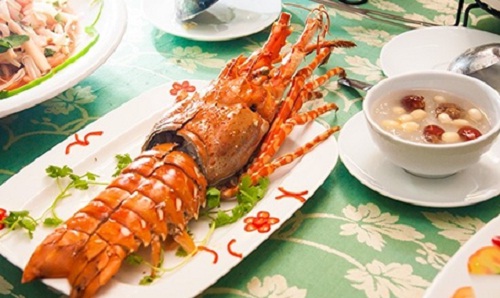
Once you reach Bai Chay City when your Vietnam Tours adventure brings you to Halong Bay it is recommended that you take a journey down gourmet lane as you take a sample of the city’s delicious seafood selections. All the seafood is fresh as they were ordered by the restaurant owners early in the morning directly from the boat of fisherman docking on the beach. This means you can be sure that the flavour of the sea is still not lost on the lobster that is going to be served to you. If you want the surest way to eating the freshest lobster, then go to restaurants that have lobster tanks where you can choose a live lobster to be cooked exclusively for you by the resident chef. You will enjoy a sumptuous meal of lobster cooked Vietnam style and this means that only fresh ingredients are used to cook your live lobster. Paradise Cruise
Enjoy Lobsters When Visiting Halong Bay


Once you have tasted the best lobster on your Vietnam Tours travel in Bai Chay City, it is time to enjoy your lobster to the next level. On Halong Bay’s biggest island, you will experience fine dining on board a floating restaurant. And what could be better than eating your favourite seafood on top of the bay that offers its own bounty. On Cat Ba Island, seafood is ordered from floating villages that have their own aquaculture. Residents of these floating houses tend lovingly their fish cages full time since it is attached to their house and that means only seafood of top quality is going to be served on your table.

So what are you waiting for? It’s time to pack your plate and fork and be ready to enjoy lobsters in the very beautiful Halong Bay.

Thứ Năm, 9 tháng 10, 2014

Phu Quoc travel guide

Sitting back in a hammock, looking out over the quiet surf, you may wonder why more people don't know about Vietnam's Phu Quoc Island. It gets almost none of the press of those islands over in Thailand -- and yet with its rugged jungle, squeaking white sands and sparkling cobalt waters, it can more than match them. And though an unbroken beach stretches for almost the entire length of the island's west coast, only a small part of it has been developed. Read more: Mekong & Phu Quoc island (5 days, 4 nights)

We've seen many an island in Southeast Asia, and we've never stumbled across somewhere quite like here. The mix of isolated and deserted beaches, and a few thriving yet unadulterated Vietnamese towns, make Phu Quoc a rare find indeed. Southern Vietnam with extension to Cambodia 10 days

Phu Quoc travel guide

Given its ease of access (a 21-minute flight from Rach Gia or an hour's flight from Saigon), it's amazing the island isn't far more developed, and while the Vietnamese government has huge plans they remain unrealised, and hopefully will remain just on paper for the foreseeable future. Read more V'spirit cruise

The island has something for everyone -- really! Ringed by over a dozen bays and beaches, some yellow sand, others brilliant strips of white, with an archipelago of islets off its south coast, a jungle-covered interior and a handful of fishing villages, there is enough to do for a longer stay than you may be planning.


Accommodation on Phu Quoc encompasses a full range of options from affordable backpacker guesthouses through to quite fancy beach resorts and hotels. Hoteliers report that some guests do nothing more than the daily bungalow-beach-restaurant-beach-bungalow circuit for days on end -- for couples in particular, Phu Quoc is a favourite.

But with a motorbike and a map, there's loads of exploring to do here, and while some of the beaches are under military control, the majority are open to the public.

Many leave Phu Quoc as their final stop in Vietnam before leaving, only to find that a couple of nights just aren’t enough. As a result, flights are changed and itineraries are revised -- so take it from us, revise your itinerary upfront and be sure to allow yourself enough time on Phu Quoc.

Thứ Ba, 23 tháng 9, 2014

Saigon Notre Dame Basilica

Saigon Notre Dame Basilica (Nha tho Duc Ba) also has another name is Immaculate Conception Cathedral Basilica, is the biggest church in Ho Chi Minh City. It is also one of Vietnam Popular Destinations. It has two bell towels with 60 meters height, at the central of City. This is beautiful religion architecture of Vietnam which attracts many tourists most. Read more: Vietnam tours

On 7th October 1877, bishop Isidore Colombert and architect J.Bourad put the first brick to build the Church and directly supervise in 3 building year (April 1880). All materials such as cement, irons, screw… comes from France.
Saigon Notre Dame Basilica

 
In 1959, the status of the Peace Virgin Mary, which made by precious marble, brought to Ho Chi Minh from Rome and put in front of the Church. Therefore, it’s called Saigon Notre Dame Basilica (Nha tho Duc Ba). The status of Virgin Mary has the straight position, her hands keeps the Globe, on the Globe put the Cross and her eyes looks up in the sky praying for the world. With this architecture, it obviously becomes one of Vietnam Popular Destinations. Read more: Mekong river tours

One more reason why this place becomes one of Vietnam Popular Destinations, Saigon Notre Dame Basilica (Nha tho Duc Ba) is 91 meters height and 35,5 meters width. The most beautiful impress is the wall. All bricks were brought from Marseille, France. It still keeps the color until today. The second impress is the Swiss Clock which put in front of church’s dome. Working 130 years, the clock still does well. Front of Church is Park with 4 streets creates the Cross. The central of Church was designed by G.Ciocchetti in 1959.

Today, Saigon Notre Dame Basilica (Nha tho Duc Ba) is not only cultural place, but also is popular of tourists from many countries on the world. So, make sure that you took a note about one of Vietnam Popular Destinations like this place in your diary travel book before visit our country

Thứ Tư, 17 tháng 9, 2014

Mua điều hòa phù hợp với không gian nhà bạn

Việc chọn mua được một may dieu hoa có công suất và tính năng phù hợp, giá thành hợp lý là điều không dễ đối với mỗi gia đình.
Trên thị trường điều hòa hiện nay, các nhà sản xuất đồ gia dụng nổi tiếng như Samsung, Panasonic, dieu hoa lg chinh hang, Toshiba... đã cho ra mắt nhiều dòng điều hòa mới sử dụng công nghệ biến tần Inverter và S-Inverter nhằm giúp tiết kiệm điện năng tiêu thụ. Kết hợp với một vài tính năng nổi bật đã làm nên những sản phẩm đặc trưng cho từng hãng. Lúc mua, khi chọn thương hiệu bạn nên đọc kỹ nơi sản xuất, bởi hiện nay các thương hiệu có tiếng đều được sản xuất, lắp ráp tại nhiều quốc gia khác nhau như Việt Nam, Trung Quốc, Malaysia...
Bạn muốn mua một máy dieu hoa midea chinh hang nhưng còn do dự chưa biết chọn loại nào cho thích hợp. Sau đây là một số chỉ dẫn cần thiết cần phải nắm rõ trước khi quyết định phải chọn mua loại nào, hoặc cách xem máy như thế nào để có thể mua được loại máy tốt, sử dụng được lâu. Máy điều hoà nhiệt độ có hai loại:
Loại treo tường (2 cục): loại này có hai phần tách rời nhau làm thành hai bộ phận, bộ phận giàn lạnh được lắp đặt trong nhà bằng cách gắn trên tường. Bộ phận quạt và bloc máy được gắn bên ngoài nhà, hai bộ phận này thông nhau bằng một ống nhựa đặt xuyên qua một lỗ hồng nhỏ (vừa với tiết diện ống) trên tường Loại máy này thích hợp cho nhà ở, có hành lang bên ngoài (dùng để đặt bộ phận quạt và bloc máy).
Loại cửa sổ (1 cục): loại này là một khối máy đồng nhất, nghĩa là bộ phận quạt nằm luôn trong máy chứ không tách rời như loại máy treo tường. Loại này thích hợp cho nhà cao tầng. Để gắn máy này chỉ cần tạo một khung cứa sổ trên tường khi gắn máy, để bề mặt (giàn lạnh) quay vào trong phòng.
Nói chung, hai loại máy đều vận hành như nhau và mua máy nào thì tuỳ theo sở thích người tiêu dùng.
Mua điều hòa phù hợp với không gian nhà bạn


Tuy nhiên, trong khi sử dụng cần đảm bảo độ lạnh trong phòng ổn định, công suất máy dieu hoa funiki chinh hang phải thừa khả năng khử sức nóng ở trong căn phòng. Sức nóng này phát ra từ 2 nguồn chính: từ bên trong căn phòng do sự tỏa nhiệt của con người, bóng đèn, máy móc... và sức nóng xâm nhập từ ngoài vào do nhiệt độ bên ngoài cao hơn nhiệt độ trong phòng.

Một quan niệm sai lầm về công suất làm lạnh là công suất càng nhỏ thì càng ít tốn điện. Trên thực tế, công suất càng lớn sẽ càng ít tốn điện, mặc dù chỉ số tiêu thụ luôn cao.

Thứ Hai, 15 tháng 9, 2014

Go kayaking in Halong Bay

ACTIVITIES
The Gulf of Tonkin is the perfect place to experience a wide range of activities, from biking to kayaking, from swimming to squid fishing. Whichever activity you choose you will be surrounded by some of the most dramatic and exciting sceneries, heightening your sense of adventure.

Kayaking while on a Halong Bay cruise

halong bay boat - kayaking
Go kayaking in Halong Bay

This is not only a healthy sporting activity but also one of the best and easiest ways to explore the magnificent caves, lagoons and World Heritage sights of Halong Bay; as well as the more unspoilt, neighboring bays of Lan Ha and Bai Tu Long. Famous for its thousands of islands and islets spread throughout the wide bays, our small kayaks for 1-2 (and even 3) people are not only easy to control and great exercise but also offer a fresh and interesting perspective on the delightful scenery surrounding you.

Biking on Cat Ba Island

Go biking in Cat Ba National Park

Taking a leisurely bike ride through the scenic landscape of Cat Ba National Park is one of the best ways to enjoy the beauty of this wonderful island. Cat Ba is the largest island in the Gulf of Tonkin. Indeed, the Lonely Planet described Cat Ba as being ‘rugged, craggy and jungle-clad, it is straight out of Jurassic Park’.

Swimming in pristine beaches in Halong Bay

halong bay boat - swimming
Swimming in Vung Ha beach


‘Really nice and refreshing’ is how passengers often describe wallowing in the placid waters of Halong Bay, Lan Ha Bay and Bai Tu Long Bay. Indeed, this is an experience not to be missed. Whether you choose to swim or snorkel, The Au Co cruise Halong bay staff are always on hand to ensure your safety and make sure you have an enjoyable time in the cool, dark waters of the Gulf of Tonkin.

Squid fishing

halong bay boat - fishing
Go fishing

Sleepless in Halong? We have the cure! As night falls, The Au Co’s staff will hand out fishing rods and guide you in this interesting pastime, which could easily occupy an entire evening. Be patient, focus, and soon, with a flick of the wrist, you can celebrate your very first catch! And of course, your ‘reward’ is to see the fruits of your labor turned into one of many inspired dishes by The Au Co’s team of chefs. This experience will make your cruise in Vietnam unforgettable.
WELLNESS
Cruising aboard The Au Co you are likely to experience a sense of calm and well-being. But to make sure we have also added spa and jacuzzi facilities, for those simply seeking relaxation, or those wishing to unwind after a day packed with adventurous activities. Read more:
Paloma Cruise Halong bay, Bai Tho cruise Halong bay

Go kayaking in Halong Bay
Spa

vietnam cruises - jacuzzi
Relax with spa service onboard

For complete stress relief, why not pamper yourself with a therapeutic massage either in the tranquility of the Spa room or in the open-air Spa area – drifting off into bliss as the cruise drifts along. A visit of Halong Bay by boat wouldn't be complete without a spa centre.

Jacuzzi

vietnam cruises - wellness
Open jacuzzi with panoramic view of Halong Bay

After an exciting day of adventurous activities and cultural excursions what better way to relax and unwind than in The Au Co’s open-air Jacuzzi. Feel any aches and pains drift away as you sip a cocktail while taking in the fantastic views of the seascape as you voyage at sunset. What defines better a luxury cruise than spending some time in a Jacuzzi while cruising in Halong Bay.

Thứ Bảy, 30 tháng 8, 2014

Chọn máy tiết kiệm điện

Chọn máy tiết kiệm điện

Hiện nay trên thị trường có 2 dòng máy điều hoà giá rẻ là máy thông thường và máy biến tần.

Máy thông thường là máy nén kiểu đóng ngắt ON – OFF, khi điều chỉnh năng suất lạnh và nhiệt độ phòng. Đặc điểm của loại máy này là nhiệt độ trong phòng dao động mạnh, máy làm việc theo chu kỳ đóng ngắt và tiêu thụ điện năng tương đối cao.

Máy biến tần là loại máy mới, hiện đại, điều chỉnh năng suất lạnh và nhiệt độ phòng bằng cách thay đổi vòng quay trục khuỷu máy nén. Nhờ cách điều chỉnh này cũng như nhờ thay động cơ xoay chiều bằng động cơ một chiều, ống mao bằng van tiết lưu điện tử... nên tiêu tốn điện năng có thể giảm tới 50% so với máy thông thường.
Chọn máy tiết kiệm điện


Tất nhiên giá máy này cũng đắt hơn khoảng 30%. Tuy nhiên, giá đầu tư ban đầu cao hơn, nhưng sẽ nhanh chóng được bù lại nhờ giá vận hành giảm và vòng đời của máy cao (khoảng 13 năm).

Nên chọn loại điều hòa tủ đứng chính hãng biến tần để tiết kiệm điện năng.
Chú ý khi lắp đặt điều hòa

- Phòng phải được hút bụi, làm vệ sinh sạch sẽ, tường và trần nhà thường được lau rửa. Ngoài ra, cần lưu ý lắp đặt điều hoà ở vị trí sao cho dòng không khí có thể được phân phối đều khắp phòng. Trong phòng bạn cũng nên để một chậu nước mát.

-  Không để dàn nóng của điều hòa âm trần chính hãng bị ánh nắng chiếu vào và tránh để dàn nóng bị cản gió. Hướng đặt dàn nóng tốt nhất là hướng bắc hoặc hướng nam. Nếu lắp đặt ở hướng đông hoặc tây thì nên có mái che để che nắng, mái che này không được cản trở luồng gió lưu thông qua dàn nóng.

- Dàn lạnh nên được lắp ở vị trí hợp lý để có thể tỏa lạnh đều trong phòng và đường gió ra không bị cảm trở bởi các vật dụng khác.

- Lắp đặt dàn nóng và dàn lạnh càng gần nhau càng tốt, độ chênh lệch giữa 2 dàn càng nhỏ càng tốt. Như vậy sẽ tiết kiệm điện hơn.

- Phòng lắp máy phải khô ráo với độ ẩm tốt nhất từ 30% đến dưới 60% để các loại vi khuẩn, nấm không có điều kiện phát triển.

Cách chọn và sử dụng điều hòa để tiết kiệm điện năng - Ảnh 2
Vệ sinh sạch sẽ phòng trước khi nắp điều hòa.
Điều chỉnh nhiệt độ vừa phải

Chỉnh nhiệt độ càng thấp, máy lạnh tiêu thụ điện càng nhiều hơn. Chỉnh nhiệt độ tùy vào khả năng thích ứng của mỗi người. Tuy nhiên, nếu nhiệt trong phòng chênh lệch quá lớn so với bên ngoài là điều không có lợi cho sức khỏe.

Theo khuyến cáo chỉ nên chênh lệch dưới 10 độ C (tốt nhất là 7 độ) và không nên dưới 20 độ C. Ví dụ nhiệt độ ngoài trời là 36 độ, nhiệt độ trong phòng nên đặt ở mức 26 - 28 độ. Bạn có thể sử dụng thêm quạt điện, như vậy sẽ đạt hiệu quả cao và tiết kiệm điện.

Nếu máy không có chế độ ngủ, hãy tăng nhiệt độ phòng thêm 2oC, nếu cảm thấy nóng lúc đầu, hãy bổ sung thêm quạt trong vòng 1h. Không đặt nhiệt độ thấp đến mức phải nằm đệm và đắp chăn khi ngủ.

Hãy tắt máy điều hoà khi ra khỏi phòng, tắt bằng điều khiển từ xa, sau đó ngắt áp tômát. Nếu chỉ tắt bằng điều khiển máy vẫn tiêu thụ khoảng 15W.

Cách chọn và sử dụng điều hòa để tiết kiệm điện năng - Ảnh 3
Hãy tắt máy điều hoà khi ra khỏi phòng, tắt bằng điều khiển từ xa, sau đó ngắt áp tômát.
Chỉnh hướng gió

Ở máy lạnh có những cánh để điều chỉnh hướng gió sang trái hoặc phải, hướng lên trên hoặc xuống. Do ảnh hưởng độ quay của quạt và vị trí của các ống dẫn hơi lạnh bên trong, nên đa số máy điều hòa nhiệt độ đều có xu hướng thổi hơi lạnh nhiều hơn về một phía của phòng. Bạn nên điều chỉnh hướng thổi lạnh vào khu vực cần thiết của phòng (giường tủ, bàn làm việc...). Từ đó, có thể chỉnh nhiệt độ ở mức tối ưu nhất.

Thường xuyên vệ sinh máy

Các bụi bẩn bám và tích tụ vào bề mặt dàn nóng, dàn lạnh, lưới lọc... làm trở ngại cho việc trao đổi nhiệt, làm máy chậm lạnh. Việc vệ sinh dàn nóng, dàn lạnh ở máy lạnh hơi phức tạp và có liên quan đến an toàn điện.

Bạn có thể nhờ thợ điện lạnh bảo dưỡng định kỳ (khoảng 6 tháng/lần). Còn lưới lọc bụi, vệ sinh dễ dàng hơn, khoảng một tháng/lần. Bạn có thể tự làm, tháo ra và rửa sạch bằng bàn chải và xà bông.