Thứ Sáu, 31 tháng 10, 2014

Đôi điều cần biết khi sử dụng nhung hươu

nhung huou tuoi cũng như các loại thuốc bổ khác, mặc dù người già, phụ nữ, trẻ em, kể cả thanh niên trai tráng... đều có thể sử dụng được. Lộc nhung có thể tán thành bột, ngâm rượu, hoặc chế biến thành món ăn thuốc để trị liệu trong ôn thận tráng dương, sinh tinh dưỡng huyết, bổ tủy, kiện cốt... dùng thích hợp cho các bệnh gân cốt yếu ở người già, trẻ em chậm phát triển, đàn ông dương hư, di tinh, liệt dương, vô sinh, đau lưng, chân tay lạnh yếu, tử cung lạnh, vô sinh hay tử cung phát triển kém, công huyết bế kinh, thiếu máu nặng hoặc huyết áp thấp đều dùng tốt. Tuy vậy, cũng vẫn có những đối tượng như: những người âm hư phát nhiệt (hỏa vượng), hay người đang mắc các chứng viêm nhiễm, tăng huyết áp đều không sử dụng được lộc nhung.

Một số cách sử dụng nhung hươu thông thường

Bột nhung hươu: Tán nhỏ nhung hươu thành bột, mỗi ngày uống từ 1-3g, chia 3 lần, chiêu với nước ấm. Cách này có thể dùng cho mọi lứa tuổi.
Đôi điều cần biết khi sử dụng nhung hươu


Rượu nhung tươi: Lấy 20g nhung hươu thái lát ngâm vào 500ml rượu ngon, để trong 14 ngày là uống được. Mỗi lần uống 1 thìa cà phê, ngày uống 1-2 lần vào trước bữa ăn làm khai vị. Hết lại làm tiếp uống. Cách này chỉ phù hợp với người lớn và có thể uống rượu được. Nhung hươu được lấy từ những con huou giong chất lượng
Rượu nhung hươu sơn dược: Nhung hươu 30g, bỏ lông thái lát, bột sơn dược 30g, bỏ vào túi vải buộc lại thả vào bình rượu cùng lộc nhung. Để 7 ngày là dùng được. Mỗi ngày uống 3 thìa canh. Chữa liệt dương, người già đái đêm.

Rượu nhung tươi, trùng thảo: Nhung hươu 20g, đông trùng hạ thảo 90g, rượu ngon (40-50 độ) 1.500ml (một lít rưỡi). Các vị trên thái nhỏ cho vào bình rượu để trong 10 ngày gạn lấy rượu uống, ngày uống 20-30ml, dùng cho người đau lưng, mỏi gối, sợ lạnh, liệt dương... do thận dương hư suy, tinh huyết khuyết tổn sinh bệnh.

Trứng gà hấp nhung hươu: Lấy bột nhung hươu 0,5-1g, trứng gà 1 quả, cho bột nhung hươu vào trong trứng gà hấp chín, hằng ngày ăn vào buổi sáng sớm lúc bụng đói, cần ăn  15-20 ngày liền. Cách này tiện lợi cho trẻ con và người không biết uống rượu. Món này thích hợp sử dụng cho người huyết áp thấp, thể chất hư nhược, gầy gò, sợ lạnh, chân tay lanh, liệt dương, đái đêm...

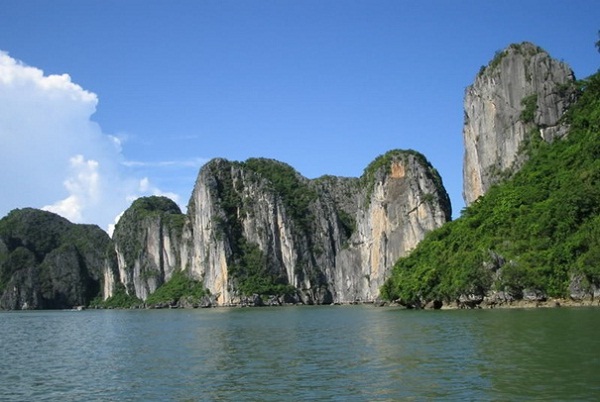
Wild Life in Halong

Wild Life in Halong: largely includes bats and a wide variety of marine creatures. Because of the tropical climate, Wild life in Halong has thrived to a large extent in Vietnam.
Bats are just one of countless wildlife species that inhabit the islands and caves of this ancient, World Heritage-listed site. Halong Bay tours has nearly 2000 islands, half of which remain unnamed. Most are covered by thick jungle inhabited only by monkeys and birds. 
Haa Long Bay features ecosystems of a tropical ocean region, such as: salt water-flooded forests, coral reefs and tropical rain forests. H?a Long Bay is home to 163 species of coral, from 44 lines of descent and 12 families. Coral reefs are distributed everywhere usually at a depth of 4 to 6m. The coverage rate of coral reef is 30% on average. There are areas where it attains 70 to 80%, such as at Cong Do and B? Hung. The coral forests of Ha Long Bay are a wonderful sight, with many extraordinary shapes and diversified colors.3 best places kayaking in Halong bay
Wild Life in Halong
Wild Life in Halong

The reefs are residence to a great number of species. There are primarily 107 varieties of fishes, water plants, algae and transitory animals and plants. Also living in these flooded forests are a great many species of animals. These include migrating 37 species of birds, 81 species of sea-bottom animals and fish belonging to 55 families. Fishing is the lifeblood of most Vietnamese, and features prominently in all their dishes. Read more: Halong bay map
In particular, bottom-feeders account for 61% of the total species in the whole tidal region, with many species like arcae, meretrixes and all kinds of crustaceans being of great economic value.
The tropical rain forest ecosystem also features a rich quantity of species: dinh, huong, sen, tau trees. This is the residence of various rare and precious creatures like deer, weasels, squirrels and in particular, white-tabby and red-haired monkeys

Thứ Năm, 23 tháng 10, 2014

Bai Tu Long National Park

Bai Tu Long National Park
Bai Tu Long National Park is a protected area zone in northeastern Vietnam. It was established in 2001, succeeding from the former Ba Mun National Conservation Zone. It is one of seven Vietnamese amphibian national parks which has both terrestrial zone and aquatic zone.

It is located within Bai Tu Long bay, which with Halong Bay forms an impressive scenery of sea and islands. Including thousands of islands and rocks, they create one of the most beautiful bays in the world. Visit Bai Tu Long Bay with Halong bay tours

According to legend, an immense dragon descended to Ha Long Bay (meaning ‘’Descending Dragon’’) millions years ago, dropping numerous eggs. These eggs hatched forming thousands of rocks and islands. The tail of the dragon extended far to the sea, forming Bach Long Vi (meaning ‘’The Tail of the White Dragon’’). As she returned to heaven, she said good bye to her offspring at the Bai Tu Long Bay (means ‘’The dragon parts the offsprings’’).


Now the Park is part of Van Don district, 20km distant from Cai Rong town.

Geography
The exactly geographical position is in a rectangle between 20o55’05″ and 21o15’10″ North latitude, 107o30’10″ and 107o46’20″ East longitude. It administratively consists of 3 communes : Minh Chau, Van Yen and Halong city of Van Don district. Travel Halong with Dragon Pearl Junk

It is composed from a terrestrial area of 61.25 km2 and an aquatic area of 96.58 km2. The zone includes over 40 islands and rocks which form three groups : Ba Mun group, Tra Ngo group and Sau group. The aquatic area includes the sea zone between the islands and the narrows between the park area and the land area which has boundary of 1 km offshore. The National Park also includes a buffer zone of approximately 165.34 km2 , which is located in a larger area including 5 communes : Minh Chau, Van Yen, Ban Sen, Quan Lan and Halong. The total population of the core zone and the buffer zone is around 24.000. Read more: Vietnam travel

Ecosystem
The National Park includes five kinds of ecosystems : Rain Broad Leaves Forest, Limestone Forest, Littoral Forest, Coral Area and Shallow Water Area.

The Rain Broad Leaves Forest area is mostly secondary forest. The average canopy covers 50 – 90%. 494 species belonging to 337 genera of 117 families have been found in this type of ecosystem. Some endangered species include Cycas balansae, Radix marindae officinalis, Ardisia sylvestris Pitard, Smilax glabra, Leopard cat (Prionailurus bengalensis), Indian muntjac (Muntiacus muntjak), Small Indian civet (Viverricula indica), Large Indian civet (Viverra zibetha).

The Limestone Forest area is forest growing in poor soil with particles of limestone on rocky islands. Some rare animals found there include Serow, Rhesus macaque.

The Littoral Ecosystem in the park is small areas surrounding the islands. It has a rather large tidal variation and is biologically highly diverse with 251 species including 19 species of mangrove, 17 species of seaweed , 29 species of marine worms , 149 species of molluscs, 22 species of crustaceans and 15 species of echinoderms.

The Coral area is located from the water depths of low tide to 10m deep. 409 species have been found including groupers, sea bass, crabs, snails, abalone and seaweeds.

The Shallow Water area covers a large area around the islands, beyond the tidal area and extending from 1km to around 4km. These areas have not been profoundly researched but 539 species have been found.

Bai Tu Long Bay overview

Bai Tu Long is a beautiful Bay lying within the area of the gulf of Tonkin, on the northeast of Vietnam. The bay comprises a part of Halong’s sea, Cam Pha town and Van Don Island District. It shares the border with Halong Bay on the southwest, with the sea on the east, with Cam Pha town on the west and with Co To island district on the northeast. Bai Tu Long Bay includes hundred of islands and islets, several among which are residence for local people.

Along with Halong Bay, Bai Tu Long Bay is one among the wonderful natural wonders, with beautiful islands and long-white-sandy beaches. Bai Tu Long is well-known for foreign tourists not only for its natural beauty, but also for a special tourist attraction – Bai Tu Long eco-tourist site. Bai Tu Long eco-tourist site lies within the area of Van Don Island district. It covers a total area of 100 ha with over 10km coastline. The construction style is the combination of the Asian and Western architecture style with coastal self-contained stilt houses harmoniously lying among the natural scenery.

Bai Tu Long National Park is another must-see destination, which represents Vietnam’s sea preservation site, which has attracted a larger number of both domestic and foreign tourists.

Bai Tu Long Bay’s eco-system is a highly diverse one with typical ecosystems such as mangrove forest, coral reef, tropical forest ecosystems. It is estimated that there are 391 species of marine creatures, most of which bring about high economic and scientific value.

Bai Tu Long Bay has great potential for developing tourism. Recently, the Bay has received much concern from visitors. With fascinating beauty and originated landscape, Bai Tu Long Bay promises to be a popular tourist attraction in coming time.

Thứ Tư, 15 tháng 10, 2014

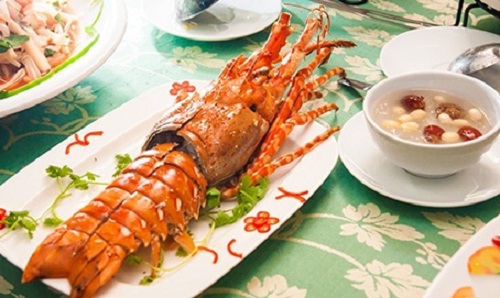
Enjoy Lobsters When Visiting Halong Bay

When you are on your favourite Vietnam Tours and you think you have marvelled enough on the beauty of Halong Bay, then you have only satisfied one of your senses.
Of course the landscape, the emerald sea, the more or less 2000 limestone karst and the beautiful junk boat cruises leave nothing but beautiful visual memories. World travellers say that if you want classical music and refined culture you go to Prague, but if you want amazing wonders of nature you go to Halong Bay. This was a fact recognized worldwide as Halong Bay was officially named one of the Seven Wonders of the World in 2012. On top of that, since 1994, the bay was already listed as a UNESCO World Heritage Site. But do you know that the perfect Halong Bay experience of your best Vietnam tours is more than what meets your eyes? V’spirit Cruise Halong

Once you reach Bai Chay City when your Vietnam Tours adventure brings you to Halong Bay it is recommended that you take a journey down gourmet lane as you take a sample of the city’s delicious seafood selections. All the seafood is fresh as they were ordered by the restaurant owners early in the morning directly from the boat of fisherman docking on the beach. This means you can be sure that the flavour of the sea is still not lost on the lobster that is going to be served to you. If you want the surest way to eating the freshest lobster, then go to restaurants that have lobster tanks where you can choose a live lobster to be cooked exclusively for you by the resident chef. You will enjoy a sumptuous meal of lobster cooked Vietnam style and this means that only fresh ingredients are used to cook your live lobster. Paradise Cruise
Enjoy Lobsters When Visiting Halong Bay


Once you have tasted the best lobster on your Vietnam Tours travel in Bai Chay City, it is time to enjoy your lobster to the next level. On Halong Bay’s biggest island, you will experience fine dining on board a floating restaurant. And what could be better than eating your favourite seafood on top of the bay that offers its own bounty. On Cat Ba Island, seafood is ordered from floating villages that have their own aquaculture. Residents of these floating houses tend lovingly their fish cages full time since it is attached to their house and that means only seafood of top quality is going to be served on your table.

So what are you waiting for? It’s time to pack your plate and fork and be ready to enjoy lobsters in the very beautiful Halong Bay.

Thứ Năm, 9 tháng 10, 2014

Phu Quoc travel guide

Sitting back in a hammock, looking out over the quiet surf, you may wonder why more people don't know about Vietnam's Phu Quoc Island. It gets almost none of the press of those islands over in Thailand -- and yet with its rugged jungle, squeaking white sands and sparkling cobalt waters, it can more than match them. And though an unbroken beach stretches for almost the entire length of the island's west coast, only a small part of it has been developed. Read more: Mekong & Phu Quoc island (5 days, 4 nights)

We've seen many an island in Southeast Asia, and we've never stumbled across somewhere quite like here. The mix of isolated and deserted beaches, and a few thriving yet unadulterated Vietnamese towns, make Phu Quoc a rare find indeed. Southern Vietnam with extension to Cambodia 10 days

Phu Quoc travel guide

Given its ease of access (a 21-minute flight from Rach Gia or an hour's flight from Saigon), it's amazing the island isn't far more developed, and while the Vietnamese government has huge plans they remain unrealised, and hopefully will remain just on paper for the foreseeable future. Read more V'spirit cruise

The island has something for everyone -- really! Ringed by over a dozen bays and beaches, some yellow sand, others brilliant strips of white, with an archipelago of islets off its south coast, a jungle-covered interior and a handful of fishing villages, there is enough to do for a longer stay than you may be planning.


Accommodation on Phu Quoc encompasses a full range of options from affordable backpacker guesthouses through to quite fancy beach resorts and hotels. Hoteliers report that some guests do nothing more than the daily bungalow-beach-restaurant-beach-bungalow circuit for days on end -- for couples in particular, Phu Quoc is a favourite.

But with a motorbike and a map, there's loads of exploring to do here, and while some of the beaches are under military control, the majority are open to the public.

Many leave Phu Quoc as their final stop in Vietnam before leaving, only to find that a couple of nights just aren’t enough. As a result, flights are changed and itineraries are revised -- so take it from us, revise your itinerary upfront and be sure to allow yourself enough time on Phu Quoc.